FAbrication of Tungsten using HOt isostatic pressing and AM (FATHOM)
- Laurence ColesDirector & Mechanical Design Lead

- Manolis PapastavrouDirector and Computational Design Lead

- MAProf Moataz Attallah
- AHAbdelmoez Hussein
- Energy
- 2022
- United Kingdom
Summary
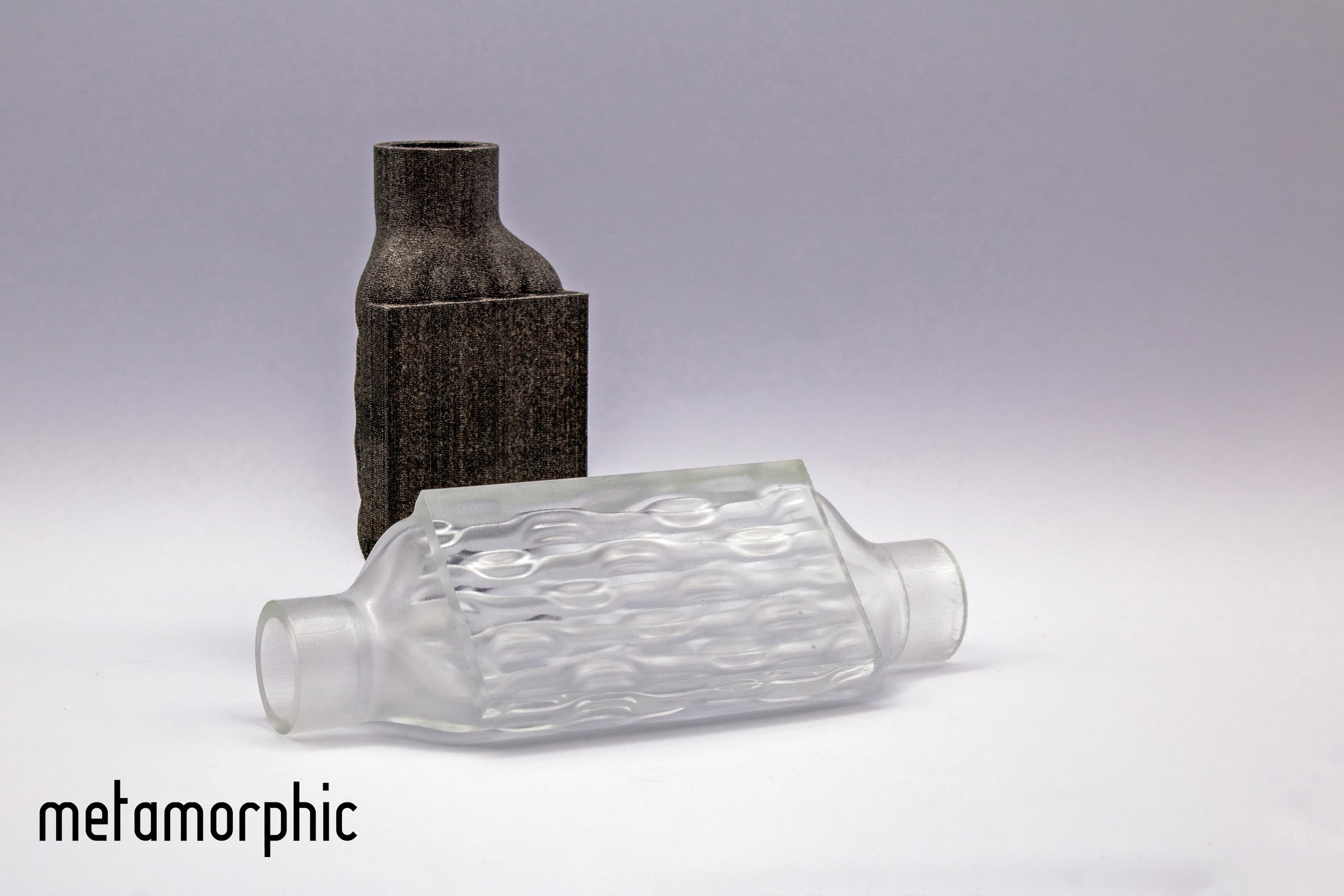
FATHOM developed new design and manufacturing routes for more efficient cooled plasma-facing tungsten shields for the nuclear fusion industry. The project brought together the Advanced Materials and Processing Laboratory (AMPLab) at the University of Birmingham (now at Loughborough University) and Metamorphic. It was funded by the UK Atomic Energy Authority (UKAEA) through the Small Business Research Initiative (SBRI).
Project Gallery
Project Story
- Challenge
- Fusion power is an important step towards the UK’s net zero targets, but developing materials that can withstand harsh fusion conditions remains a key hurdle. Tungsten and its alloys are the material of choice for plasma-facing components. However, conventional powder metallurgy (press and sinter) is limited in its ability to produce complex components that can withstand high temperatures (>1000 K) for long periods (>10⁷ s) within the reactor.
- Approach
- The AMPLab team, led by Prof. Moataz Attallah, investigated laser-based metal 3D printing and net-shape powder hot isostatic pressing (HIPping) of tungsten. Metamorphic applied its expertise in advanced computational design tools and CFD to exploit the geometric freedom these processes offer.
- Solution
- The combined manufacturing and design routes made possible high-performance tungsten shield designs that cannot be manufactured conventionally. These designs featured novel thermal management, part consolidation and mass reduction.
- Outcome
- FATHOM improved on the state of the art for plasma-facing tungsten shields and addressed one of fusion technology’s long standing manufacturing challenges. The project also supported UKAEA’s aim of encouraging innovation in fusion heating and cooling systems, materials and manufacturing.
Technology Details
- SLM
- Powder Bed Fusion
- Tungsten Alloy
Process Steps
Printer category: Powder Bed Fusion
- 1
Step 1Design
Create free account →Design Provider
Hidden until you sign in
- 2
Step 2Printing
- Technology
- Material
Application Profile
POAPrice on application
Highly Complex
Demands advanced, expert-level skill and deep technical expertise.
Functioning Prototypes
Component
★☆☆
Can depend heavily on virgin fossil fuels, produce harmful emissions, and yield non-recyclable materials. Involves high energy consumption during material manufacturing. As an AM material, requires some re-processing after use. This rating relates to the technology type only. The design, purpose and longevity of the entire object can offset any of the technology type's negative sustainability credentials.
Employed at an AM provider company
Heat Exchange Fusion Energy Tungsten Cooling Refractory CFD
Continue reading
Create a free account to unlock this application
- Continue exploring Additive Companion
- Save your progress
- Personalise your experience
- No credit card needed